
Why clinicians find hope in dual diagnosis
Table of Contents
For the past six years, former New Hampshire Supreme Court Chief Justice John Broderick has traveled the state sharing the story of his son’s mental illness and his family’s failure to get him the help he needed.As the Associated Press reported: “In 2002, Broderick’s 30-year-old son attacked him with a guitar while he slept. Broderick said his son had shown signs of mental illness as early as age 13, but it wasn’t until he spent three years in prison that he got the help and medication he needed to treat his depression and anxiety.” The Brodericks’ story is, in part, about a failure to understand that beneath his son’s drinking problem, lay a serious mental illness.
A year ago, Seacoastonline and the Union Leader launched a series of stories on the state of mental health in New Hampshire, inspired by Broderick’s work.
Until we are all informed enough, impatient enough and brave enough to finally and publicly say without embarrassment, ‘my mother, my father, my sister, my friend, my child, myself,’ solutions − although visible and achievable − will remain beyond our grasp. That’s a choice. It’s our move. Together we could change it. We need to.
In the series’ final chapter, we look at advances and obstacles to the diagnosis and treatment of co-occurring mental illness and substance use disorders. And, as we did back in May 2022, we begin with the story John Broderick has so generously shared with tens of thousands of people in the hopes that they will learn from his experience.
Mental illness often mistaken for alcoholism
When Broderick and his wife Patti saw their son begin drinking heavily in his early 20s, they assumed he had become an alcoholic.
“What we saw was drinking that was alarming,” Broderick recalled. “My son used to say to us, ‘Dad, I’m not an alcoholic. If I didn’t have these feelings I wouldn’t be drinking.’”
John Broderick discusses the importance of mental health
Dartmouth Health’s John Broderick advocating for mental health
Mental health treatment can be effective
Mental health advocate discusses the lack of resources in the U.S.
Mental health affects every person, even if you don’t know it
Broderick and his wife sought advice from “the alcohol people” who suggested tough love, recommending they tell their son if he was going to drink, he’d need to leave their home.
The results were disastrous. As Broderick has shared in public appearances over the past six years, their son hit bottom out on the streets and when, fearing for his life, the Brodericks allowed him to come home, he attacked and badly injured his father.
Only after he received psychiatric care in prison did the Brodericks learn their son had an underlying mental illness causing acute anxiety, depression and panic attacks. Once he began to receive treatment for that illness, his desire to drink went away and he now hasn’t had a drink for 19 years, Broderick said.
Diagnosis and treatment: Often mental health or addition
At least half the people who have a serious psychiatric illness also have a co-occurring substance use disorder, according to Dr. William Torrey, chair of the psychiatry department at Dartmouth Health.
“It’s more common than not, that to help someone move forward in their life, you have to help them address both the psychiatric and the substance use difficulty at the same time,” Torrey said.
A challenge for patients and caregivers, however, is that treatment for mental illness and substance use disorders, developed in separate and distinct cultures; the former in the evidence-based field of psychiatry and the latter in faith-based programs like Alcoholics Anonymous.

Mark Washburn
Often healthcare providers have expertise in one area but not the other, leaving them unable to fully address the co-occurring disorders.
Societal biases also come into play.
“I’ve heard this from people in real positions of power that someone with a mental illness can’t help it, but a substance use disorder, you know, that’s a choice,” said Susan Stearns, executive director of National Alliance on Mental Illness-New Hampshire. “But I think anyone who’s ever known someone who had a substance use disorder, no one chooses to live with the pain that it causes you and your loved ones.”
“The systems are still very siloed,” Stearns said. “It’s kind of stunning to me how many places you find that silo. Even here at NAMI New Hampshire, we are really working on trying to break that down.”
Insurance companies compound the problem
Insurance companies, both public and private, compound the issue by coding the two disorders as separate and distinct.
“A lot of insurance has mental health and addiction care carved out so that there’s a whole different part of the insurance company that’s managing that care,” Torrey said. “Insurance companies tend to create a lot of obstacles to getting care.”
It presents a lot of challenges when mental illness and substance use disorder are treated by two totally different sets of professionals.
At the time of initial diagnosis, it’s not always clear whether a patient is struggling with a mental illness, substance use disorder or a combination of both, and that matters as they set out on a course of treatment.
“You get into this chicken and the egg thing,” said Stearns. “It comes down to what system you land in because it’s such a bifurcated system. What’s your primary diagnosis? That’s really where it becomes an issue for folks. Because your primary diagnosis is going to basically send you in one direction or the other.”
Which comes first, mental illness or substance use disorder?
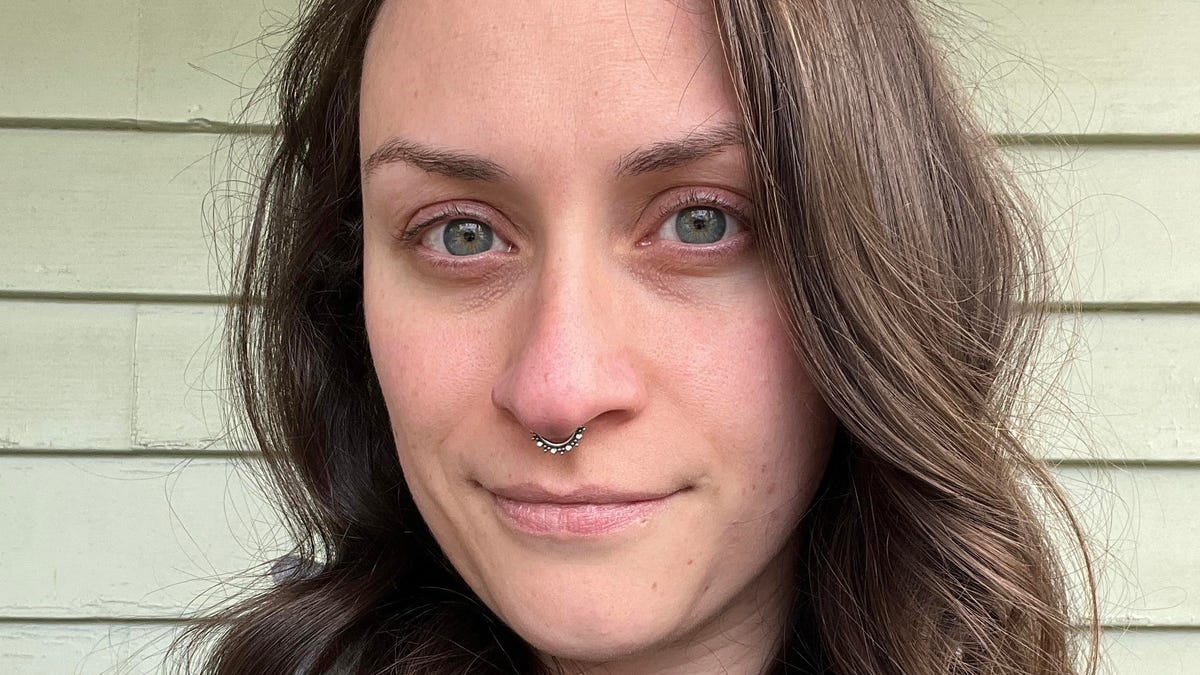
Laurie Scorzelli, 31, a connection group facilitator for NAMI-NH, knows this problem firsthand. While she has struggled with mental health challenges for most of her life, she developed a problem with alcohol in her late teens and early 20s.
She said heavy drinking allowed her to “communicate the message that there’s a big problem” but that the drinking also brought “some relief from the big emotions and the stress and social anxiety that I didn’t really know I even had.” Drinking helped her “feel at ease and really connected with people.”

Provided photo
“(The drinking) started as one of the impulsive behaviors I was using to communicate, but then I also found some relief in it,” Scorzelli said.
She described hitting two “jackpots,” while drinking, an encounter with police and a nasty fall, that led her to enter a recovery program.
She said peer support to address her drinking only got her so far.
“When I stopped drinking, it wasn’t a magic solution,” Scorzelli said. “I still had a lot of stuff to work through.”
“It presents a lot of challenges when mental illness and substance use disorder are treated by two totally different sets of professionals,” Scorzelli said. “You don’t necessarily end up with a provider who’s knowledgeable in both areas. Even if you are seeking treatments for your substance use, if a person you’re working with doesn’t have a lot of knowledge about underlying mental illness that’s kind of driving your substance use, that can be difficult.”
Medical professionals need to know your history
In order to diagnose what’s troubling a person, clinicians will start by taking a detailed history, Dr. Torrey said. “You try to understand the role of substances in someone’s life, how are they using and is the use having negative consequences in their life.”
The basic definition for a substance use disorder, Torrey said, is someone continuing to use a substance despite negative consequences.
“The negative consequences can be how you feel about yourself,” Torrey said. “You sort of feel out of control, that the substances are running your life rather than you using the substance in your life. It can have negative consequences on your hopefulness about the future. It can have negative consequences in your relationships. It can have negative consequences vocationally. It can have negative consequences legally or in your general health.”
On the mental health side, Torrey said, “You’re trying to get a good sense of the pattern of feelings and the pattern of impact on someone’s life of the symptoms and getting a good symptom history.“
What is emotional health? And how it impacts your wellbeing.
What a dual diagnosis and treatment means for outcomes
Based on research beginning in the 1990s, Torrey and his Dartmouth colleagues found that people did better when they addressed both mental illness and substance use disorders at the same time.
“You really just have to treat both simultaneously,” Torrey said. “So you know, treating someone who has both an alcohol use difficulty and depression if you think that medicine’s indicated for the depression, you’re better off just treating with the medicine while you’re also trying to address the alcohol use difficulty. Treating one and then the other is not as effective as addressing both simultaneously.”
Joan Rideout Ayala has a dual diagnosis of mental illness and addiction. During her lifelong battle she has learned coping skills to sustain her and end her addiction and cope with her mental illness.
Leah Nash for USA TODAY
Stearns, at NAMI-NH, said evidence-based integrated dual diagnosis treatment is what she sees being used effectively by mental health centers in New Hampshire. Intensive outpatient programs are successful, she said, because those in treatment still have their community supports and they can work while getting treatment for their disorder.
‘Forced sobriety isn’t treatment’
“If you have someone who’s using substances and you take them out of their community and give them treatment and then drop them back into that community, well, if they were using in that community, now they’ve got to figure out how to navigate their world,” Stearns said. “I think sometimes people think well, if we send them to jail, they’ll get sobered up and they’ll be fine. But, you know, forced sobriety isn’t treatment.”
Torrey observed patients do better when they are diagnosed early, before their social supports have been damaged by negative behaviors.
“People’s social supports tend to deteriorate over time when they have an active substance use difficulty,” Torrey said. “So the life structures themselves can be less strong in supporting someone. You might not have a marriage anymore, you might not have a house. It can have an impact on your employment. Or, just even the people around you may not feel that great about you if you have an ongoing substance use difficulty that you’re not addressing.”
What does recovery look like?
The goal of treatment, Torrey said, is helping people to “recover a gratifying, satisfying, full broad life.”
For both mental health and substance use, the thing that’s going to motivate someone toward taking action to get help is figuring out what they care about and want out of life, Torrey said.
“It’s drawing someone forward toward the life that they’re seeking and wish to have,” Torrey said. “You’re trying to connect with a person around what’s important to them in their life, and then help them to build a path from where they are now to that desired future.”
In addition to helping patients envision a better life through cognitive behavioral therapy, clinicians can prescribe specific medicines to block cravings for addictive substances and others to address underlying mental health issues such as depression, ADD, PTSD, anxiety, bipolar disorder or schizophrenia.
“The treatments really are around helping people build those skills to address and to take care of their own health. And the tools are both therapy and medicine,” Torrey said.
Where mental illness and substance use disorders intersect
Mental illness and substance use disorders often exacerbate each other.
“If you have schizophrenia or severe bipolar illness and you also have challenges with alcohol or marijuana or a different substance your brain is already a little bit fragile and your life is a little more tenuous because of your psychiatric difficulty,” Torrey said. “It takes less alcohol or less marijuana or less other substances to throw your life off. You’re more likely to get greater difficulties at a lower dose of the substance than someone who doesn’t have a co-occurring psychiatric illness. So, one challenge is that the substances themselves will have more of an impact on your life than they would if you didn’t have a co-occurring substance use or a co-occurring mental health concern.”
The concept of tough love is dangerous. And it can be heartbreaking. I’ve heard from folks who went down that road and then they got the call.
In the case of depression, for example, Torrey said the mental illness can sap a patient’s will to stop drinking.
“If you have depression and alcohol use disorder, the depression itself will make you feel more hopeless and less motivated, have less get up and go to do anything about addressing the alcohol use difficulty,” Torrey said.
Genetics is a factor in both mental illness and substance use disorders
With both mental illness and substance use, genetics are a factor.
“If one of your parents had an alcohol use disorder, you’re at much higher risk than someone who didn’t have a first-degree relative with an alcohol use disorder,” Torrey said. “There’s a strong genetic component. And that’s true with the psychiatric illnesses as well. You know, if you have a parent who has schizophrenia, you have about a one in 10 chance of developing schizophrenia. Whereas if you don’t have a parent who has schizophrenia, you have about a one in a hundred chance of developing schizophrenia. So both substance use and common psychiatric disorders have pretty strong genetic components.”
Stress and hardship can also trigger a genetic predisposition to substance use or mental illness disorder.
“Each of us has a certain genetic risk of developing these different kinds of difficulties,” Torrey said. “Sometimes the genetic risk is so severe that it really doesn’t take any particular stress to bring it out. There’s families where alcohol use disorders are just so strong that if someone drinks, they’re highly likely to have an alcohol use disorder and there’s other families where that’s really not so common and they’re much less likely to develop it even in the face of very significant stress. … There are people that are highly prone to get depressed, and some people just slip into it even without major life stressors. And other people would only get depressed if some major stress happens in their life.”
“Me too”: Jason Ritter and Drew Barrymore’s raw conversation on her show may matter more than you think
Tough love not useful and can be ‘dangerous’
If someone in your life is struggling with substance use or mental illness, tough love is not the recommended course of action.
“There’s increasing recognition in the field that addressing substance use requires really connecting with a person humanely and psychologically and that a tough love approach tends not to be as useful as building motivation for change through engagement with individuals,” Torrey said. “And the same is true with mental health difficulties.”
Stearns of NAMI-NH goes even further.
“The concept of tough love is dangerous. And it can be heartbreaking. I’ve heard from folks who went down that road and then they got the call,” Stearns said.

Provided
Why connection is important for recover: John Mulaney’s first call in rehab was from Pete Davidson.
Hope is essential because treatments to do
Clinicians, patients and advocates all stress the importance of getting someone in crisis into treatment.
“Each of these kind of conditions is very treatable,” Torrey said. “There’s a lot of reason for hope. People do much better when they have easy access to high-quality care early on.”
After years of sharing his family’s painful experience with thousands of people and working with mental health leaders across the country, Broderick’s hope is that when faced with a loved one’s mental illness, families and caregivers will respond with kindness and love and reach out to get the professional help they need.

Deb Cram/Seacoastonline and Fosters.com
In his book, “Backroads and Highways: My Journey to Discovery on Mental Health,” Broderick ends with this thought:
“Until we are all informed enough, impatient enough and brave enough to finally and publicly say without embarrassment, ‘my mother, my father, my sister, my friend, my child, myself,’ solutions − although visible and achievable − will remain beyond our grasp. That’s a choice. It’s our move. Together we could change it. We need to.”
If you need help
If you or someone you know is struggling emotionally, please reach out and get support:
NH Rapid Response Access Point – Call/Text 1-833-710-6477 – If you or someone you care about is experiencing a mental health and/or substance use crisis, you can call and speak to trained and caring clinical staff. You’ll be served by compassionate providers from mental health centers in your community who can help you access vital resources in an emergency.
988 Suicide & Crisis Lifeline – Call or text 988 for 24/7, free and confidential support for people in distress, prevention and crisis resources for you or your loved ones, and best practices for professionals. (Chat option is also available at 988lifeline.org).
Dartmouth Health has compiled a list of mental health resources at https://www.dartmouth-health.org/mental-health/resources